
Endodontics · Harley Street, Marylebone
Root Canal Treatment
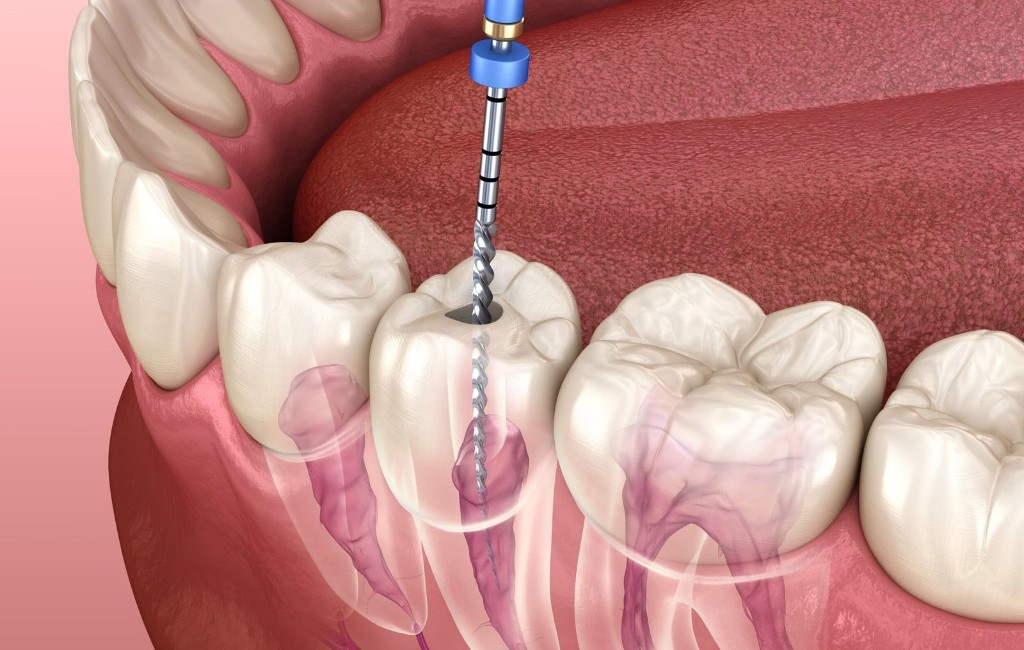
Root canal treatment is the procedure used to save a tooth when the nerve inside becomes infected or dies, removing the infection, cleaning the canal system, and sealing it permanently. It has an undeserved reputation for being painful; performed properly under modern anaesthesia, it should feel no different to having a filling. At This Is It Dental, Dr. Rena Uberoi uses precision rotary instruments and Biolase laser decontamination to ensure the most thorough clean possible and the best chance of keeping your natural tooth.
When Is Root Canal Treatment Needed?
Root canal treatment becomes necessary when bacteria penetrate the inner chamber of a tooth, the pulp, through deep decay, a structural fracture, or a leaking restoration. Once the pulp becomes infected or dies, the infection spreads through the root canal system and into the surrounding bone. Without treatment, this leads to a dental abscess, spreading infection, and ultimately tooth loss.
Common indicators include a persistent, throbbing toothache; severe sensitivity to heat or cold that lingers after the stimulus is removed; spontaneous pain without an obvious trigger; visible swelling or a small pimple on the gum near the affected tooth; and tooth discolouration. Some infected teeth present no symptoms at all, which is precisely why routine digital X-rays at check-up appointments remain clinically important.
Our Approach
Dr. Rena Uberoi's commitment to unhurried, exact clinical practice applies directly to endodontics. We dedicate the time required to fully shape, clean, and decontaminate the entire root canal system, including the use of our Biolase near-infrared laser, which reaches areas that instruments alone cannot fully sterilise. The result is a thorough biological clean that significantly reduces the risk of re-infection.
The Clinical Process
-
Complete Anaesthesia
We apply topical numbing gel before the injection and allow ample time for the anaesthetic to take full effect. We do not begin clinical work until you are completely numb. Most patients are genuinely surprised by how little they feel.
-
Rubber Dam Isolation
A thin rubber dam is placed around the tooth to maintain a completely sterile field throughout the procedure, protecting against contamination from saliva.
-
Access and Canal Shaping
A small opening in the crown accesses the pulp chamber. Precision nickel-titanium rotary instruments carefully shape each root canal, removing infected and necrotic tissue while preserving the maximum amount of root dentine.
-
Laser Decontamination
Our Biolase diode laser decontaminates the canal system, penetrating areas that instruments alone cannot fully clean and significantly reducing the bacterial load.
-
Canal Sealing
The cleaned canals are filled with gutta-percha, a biocompatible material, and sealed with an antibacterial cement, permanently closing the canal system against bacterial re-entry.
-
Restoration
A root-treated tooth must be protected with a crown or a substantial filling to prevent fracture. We discuss the most appropriate long-term restoration at the end of treatment.
Post-Operative PBM Therapy
Immediately following the procedure, Dr. Uberoi's team applies Photobiomodulation (PBM) therapy using our near-infrared laser. This painless light application stimulates cellular healing around the root tip, reduces post-operative sensitivity, and accelerates bone remodelling, meaning your recovery is typically faster and more comfortable than with conventional endodontics alone.
Transparent fees
| Root Canal Treatment (per tooth, dependent on number of canals and complexity) | From £390 |
|---|
Fees confirmed in writing at your consultation. No treatment proceeds without your agreement.
Email Dr Rena Uberoi
Send us an email and we aim to get back to you the same day.
Frequently asked questions
Is a root canal painful?
With modern anaesthetics and sufficient time to allow them to work fully, root canal treatment should be entirely comfortable. You will feel pressure during the procedure, but not pain. The inflammation and throbbing before treatment, caused by the infection itself, is invariably far worse than the procedure to resolve it.
How long does it take?
A single-rooted tooth, such as a front tooth or premolar, can often be treated in one appointment of approximately 60 to 90 minutes. A multi-rooted back molar will typically require two appointments. We give you a clear timeline after reviewing your X-rays.
What happens after the treatment?
You may experience mild tenderness in the surrounding gum tissue for two to three days as the periapical tissues settle. This is entirely normal and easily managed with over-the-counter ibuprofen. A permanent crown or substantial filling should follow promptly to protect the treated tooth from fracture.
Is it better to just have the tooth extracted?
Wherever possible, we advocate saving your natural tooth. Extraction creates a gap that, if not replaced, leads to drifting of adjacent teeth, bone resorption beneath the empty socket, bite changes, and potential TMJ strain. Saving the natural tooth with root canal treatment is almost always the more conservative and cost-effective long-term approach.
Can a previously root-treated tooth become re-infected?
Yes, in some cases, if the original treatment was incomplete, if the sealing restoration has failed, or if the tooth has fractured. Re-treatment endodontics is possible in many cases. We assess this thoroughly using digital imaging before advising on the best course of action.
Book a root canal consultation
Book a consultation for an honest assessment and a clear written plan.