Oral Surgery · Harley Street, Marylebone
Wisdom Teeth Removal
Wisdom teeth are the third molars that typically emerge in your late teens or early twenties, and because modern jaws often lack the space to accommodate them, they frequently cause problems. From recurring infection and pressure on adjacent teeth to cysts and hidden decay, there are several clinical reasons why removal may be recommended. At This Is It Dental, every wisdom tooth case is assessed using 3D CBCT imaging before any surgical planning takes place, so there are no surprises.
When Extraction Is Clinically Advised
Founded on a philosophy of conservative, intentional care, we do not remove healthy, fully erupted, functional wisdom teeth. Surgical intervention is recommended only when a third molar presents one of the following biological issues:
-
Partial Eruption and Pericoronitis
When a tooth only partially breaks through the gum tissue, it creates an anatomical trap for food debris and bacteria. Nearly impossible to clean effectively, it frequently triggers a painful, recurring bacterial infection known as pericoronitis. Antibiotics suppress it temporarily; they do not resolve it.
-
Horizontal or Angular Impaction
A tooth growing sideways or at an acute angle applies continuous pressure against the roots of the adjacent second molar, potentially causing root resorption (dissolving of the neighbouring root) or hidden decay on a healthy tooth with no symptoms.
-
Insufficient Space
A tooth with no viable eruption path continues to exert pressure, causing crowding and bite changes over time.
-
Cyst Formation
In rare instances, the follicle surrounding an impacted tooth develops into a cyst that slowly expands within the jawbone, hollowing out the surrounding bone structure.
The Safety of 3D CBCT Digital Diagnostics
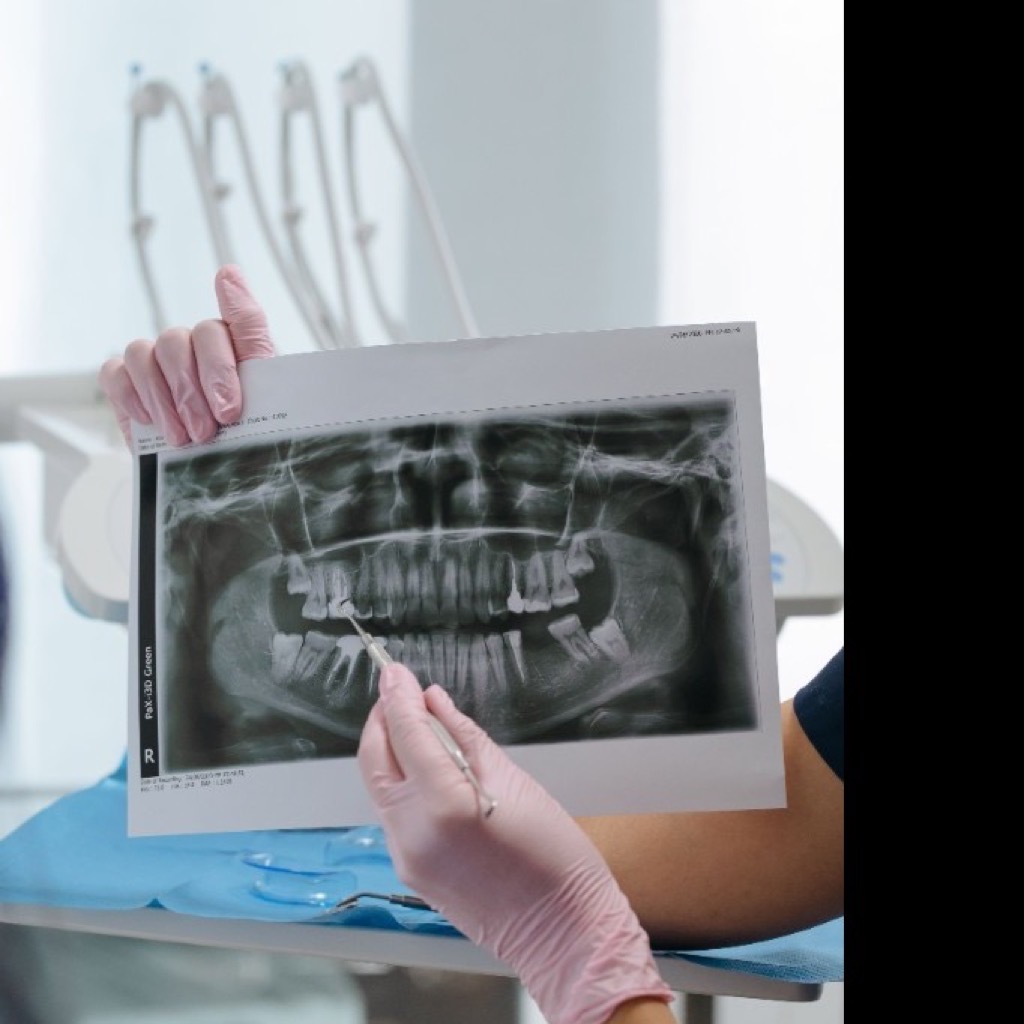
The primary anatomical risk in lower wisdom tooth removal is the proximity of the inferior alveolar nerve, which provides sensation to the lower lip, chin, and teeth. Standard 2D X-rays show the root and nerve overlapping without revealing their three-dimensional spatial relationship.
To reduce clinical guesswork, This Is It Dental utilises advanced 3D CBCT (Cone Beam Computed Tomography) scanning before any surgical planning. This generates a complete three-dimensional digital map of your jawbone, showing the exact sub-millimetre distance and spatial relationship between your tooth roots and the nerve bundle from every angle. For many patients this confirms a straightforward procedure. For a small number, it reveals proximity that significantly influences the surgical approach.
The Clinical Process
-
Complete Anaesthesia
We administer highly targeted local anaesthesia and dedicate ample time for the nerve pathways to become completely desensitised. You will feel the pressure of the procedure, but absolutely no sharp pain.
-
Conservative Access
If the tooth is partially or fully beneath the gum line, a precise, minimal incision exposes it cleanly.
-
Precise Sectioning
Rather than applying force to extract an impacted tooth in one piece, which places significant stress on surrounding bone, we carefully divide the tooth into smaller fragments, each removed gently and atraumatically. This conservative technique is one of the most important factors in reducing post-operative swelling and discomfort.
-
Sterile Irrigation & PBM Therapy
The socket is thoroughly cleansed with sterile saline. Immediately post-extraction, we apply Photobiomodulation (PBM) therapy using our Biolase near-infrared laser, stimulating cellular recovery, managing immediate discomfort, and significantly reducing post-operative swelling.
-
Biocompatible Sutures
Where required, small dissolvable sutures close the tissue neatly and support stable blood clot formation for predictable, clean healing.
Transparent fees
| Routine Extraction | £200 |
|---|---|
| Surgical Consultation & 3D CBCT Scan | Confirmed at assessment |
Fees confirmed in writing at your consultation. No treatment proceeds without your agreement.
Email Dr Ramesh Siva
Send us an email and we aim to get back to you the same day.
Frequently asked questions
Will I be in pain during the extraction?
No. The procedure is performed under effective local anaesthesia that completely blocks pain receptors. You will feel the pressure of the tooth being manoeuvred, a normal, expected sensation, but not pain. We work entirely at your pace and stop at any point if you need a moment.
How long does the recovery take?
Most patients experience a healing period of three to five days. Mild swelling and a dull ache are entirely normal biological responses as the bone heals. By combining conservative sectioning technique with immediate post-operative PBM laser therapy, Dr. Siva's team actively reduces the typical swelling and stiffness. Many patients manage comfortably with over-the-counter ibuprofen alone.
What is a dry socket and how is it prevented?
A dry socket occurs when the protective blood clot in the extraction site is prematurely dislodged or dissolves, exposing underlying bone to air and food, causing a deep, radiating ache. Prevention: avoid smoking, drinking through straws, or vigorous rinsing for the first 48 hours post-surgery. Our comprehensive aftercare instructions and stable suturing technique support reliable clot formation.
Will my facial structure change after removal?
No. Wisdom teeth are deeply embedded within the rear corners of the jaw, far behind the structural bone and facial fat pads that define your cheeks and jawline. Removing them has absolutely no impact on your outer facial appearance.
Do all four wisdom teeth need removing at the same time?
Not necessarily. We assess each tooth on its individual clinical merit. If all four are indicated for removal and you are comfortable with it, treating them together reduces total recovery time. If only one or two are causing problems, there is no clinical reason to remove the others proactively.
Book a wisdom teeth assessment
Book a consultation for an honest assessment and a clear written plan.