Airway Medicine · Harley Street, Marylebone
Snoring & Sleep Apnoea
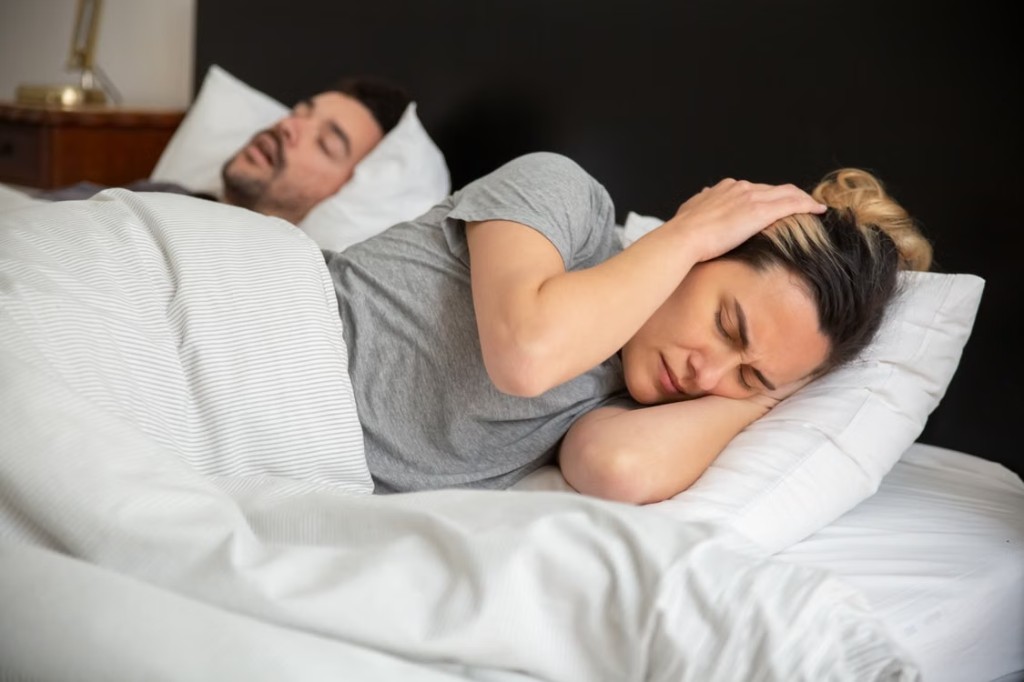
Snoring is the sound of a partially obstructed airway during sleep, and while it is often dismissed as a minor annoyance, it can be a sign of something more clinically significant. Obstructive Sleep Apnoea (OSA), where the airway repeatedly collapses during the night, is directly linked to elevated risk of heart disease, high blood pressure, and chronic fatigue. At This Is It Dental, Dr. Rena Uberoi approaches sleep-related breathing disorders from a neuromuscular perspective, designing custom appliances that keep the airway open without the need for a CPAP machine.
What Is Actually Happening
During an apnoea episode, the brain and vital organs are repeatedly starved of oxygen, triggering an immediate sympathetic fight-or-flight nervous system response that shatters your sleep architecture and places sustained strain on the cardiovascular system.
At This Is It Dental in London, Dr. Rena Uberoi treats snoring and mild-to-moderate sleep apnoea from an exact, neuromuscular perspective. Guided by her commitment to evidence-based clinical practice, we utilise advanced digital airway mapping to design bespoke Mandibular Advancement Appliances (MAAs), highly specialised, laboratory-milled dental splints that stabilise the airway during sleep, eliminating snoring and restoring optimal blood oxygenation without the need for a CPAP machine.
The Biological Mechanics of Airway Collapse
As you enter deep sleep, the muscles of your tongue, soft palate, and lower jaw naturally relax. In many individuals, this allows the lower jaw to drop backwards, pulling the tongue with it into the throat and severely narrowing the pharyngeal airway space. Air forced past the vibrating soft tissues produces the sound of snoring. When the airway collapses entirely, breathing stops for ten seconds or longer, often hundreds of times a night, causing blood oxygen saturation to drop dangerously.
The Direct Link to Bruxism and Jaw Pain
There is a strong biological connection between sleep-disordered breathing and dental damage that many high-volume practices entirely overlook. When the airway collapses during an apnoea episode, the brain sends an intense neuromuscular signal to the jaw muscles to clench and grind the teeth forward, a survival reflex to force the tongue out of the throat and restart breathing. Consequently, untreated sleep apnoea is a primary root cause of chronic nocturnal teeth grinding (bruxism), shattered dental restorations, flattened enamel, and severe inflammation within the TMJ. If you have been told you grind your teeth heavily, it is worth asking whether sleep-disordered breathing may be the underlying driver.
The Clinical Process
-
Specialised Screening & Diagnostics
Dr. Uberoi begins with an in-depth clinical evaluation of your upper airway anatomy, assessing tongue position, tonsil size, and soft palate restriction. If sleep apnoea is suspected, we facilitate a comprehensive home-based sleep study utilising a medical-grade pulse oximeter and respiratory sensor to record your nocturnal oxygen levels and Apnoea-Hypopnoea Index (AHI), confirming the diagnosis objectively before treatment begins.
-
High-Resolution 3D Scanning
We sweep an advanced intraoral camera over your dental arches to capture a highly accurate 3D digital blueprint of your mouth, completely bypassing uncomfortable putty trays.
-
Precision Protrusive Registration
Using a specialised gauge, we mathematically calculate and record the exact safe range of how far your lower jaw can advance without stressing your jaw joints. This finds the optimal position that opens the airway while maintaining complete muscular comfort.
-
Custom Laboratory Milling
Your digital scans and bite records are transmitted to our partner laboratory in London, where the appliance is custom-milled from a dense, medical-grade biocompatible polymer to fit your teeth with sub-millimetre accuracy.
-
Fit, Delivery, and Fine-Tuning
You return to receive your appliance. Our custom appliances use a specialised incremental titration mechanism, you advance the lower jaw position forward by fractions of a millimetre over several weeks, slowly expanding the airway until your snoring completely stops.
Appliances we use
Transparent fees
| Custom Anti-Snoring Appliance (hard acrylic, laboratory-milled) | From £950 |
|---|---|
| Somnowell Premium Appliance | £2,000 |
| Medical-Grade Home Sleep Study (if required) | Confirmed on assessment |
Fees confirmed in writing at your consultation. No treatment proceeds without your agreement.
Email Dr Rena Uberoi
Send us an email and we aim to get back to you the same day.
Frequently asked questions
Why are custom dental appliances superior to online anti-snoring guards?
Generic boil-and-bite guards are bulky and soft. Because they are not calibrated to your jaw mechanics, they frequently hold the jaw in an unnatural position, causing TMJ pain and tooth movement. The soft material also stimulates the chewing reflex, causing you to clench harder rather than rest. Our hard, medical-grade custom appliances are precisely balanced to your unique anatomy, protecting your teeth and TMJ while reliably opening your airway.
Do I have to wear the appliance every night indefinitely?
A Mandibular Advancement Appliance manages the structural problem while it is worn, much as glasses correct vision while they are on. To maintain an open airway, eliminate snoring, and prevent oxygen drops, the appliance should be worn every night.
Can a dental appliance replace a CPAP machine?
Current international medical guidelines position custom MAAs as an ideal first-line treatment for mild-to-moderate OSA, and as a viable alternative for those with severe OSA who are completely intolerant of CPAP. We work collaboratively with sleep physicians where appropriate.
Are there any side effects when first starting to wear it?
When beginning, mild temporary jaw tightness or increased saliva production on waking is common and typically resolves within 15 to 30 minutes. We provide a specialised morning re-alignment exercise device with your appliance to help your bite return to its natural position comfortably each morning.
Book a sleep assessment
Book a consultation for an honest assessment and a clear written plan.