Neuromuscular Dentistry · Harley Street, Marylebone
Mouthguards & Occlusal Splints
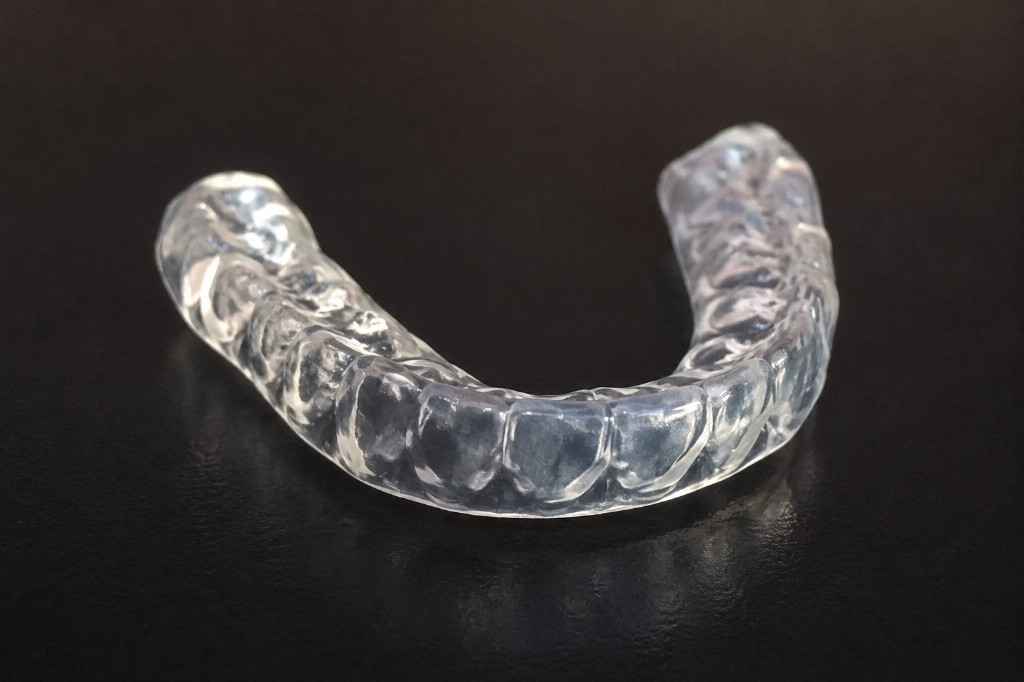
Occlusal splints and mouthguards are custom-made dental appliances designed to protect the teeth, joints, and muscles from the effects of grinding, clenching, or impact. They range from precision-engineered night guards for bruxism and TMJ dysfunction through to heavy-duty sports guards for contact athletes. At This Is It Dental, every appliance is fabricated from 3D digital scans, not putty trays, for a fit that is accurate enough to actually work.
The Structural Consequences of Bruxism & TMJ Dysfunction
At This Is It Dental in London, Dr. Rena Uberoi approaches jaw joint health and enamel protection from an exact, neuromuscular perspective. We do not provide generic, store-bought mouthguards. We utilise advanced 3D digital mapping to engineer custom-fitted occlusal splints and sports guards that absorb harmful forces, alleviate chronic muscular pain, and safeguard the long-term integrity of your smile and jaw joints.
When jaw mechanics are unbalanced or subjected to chronic nighttime clenching, it manifests across a wide range of structures:
-
Enamel Wear and Micro-Fractures
Chronic grinding shears away the protective outer enamel, exposing the highly porous dentine beneath. This results in severe temperature sensitivity, root exposure, and a structural shortening of the teeth that literally collapses the height of your face over time.
-
Temporomandibular Joint Dysfunction (TMD)
Continuous pressure decompresses the delicate cartilaginous discs inside the jaw joints, triggering localised joint inflammation, painful clicking and popping, or a restricted ability to open your mouth normally.
-
Neuromuscular Fatigue
Constant nighttime clenching leaves the masseter and temporalis muscles in chronic spasm. This refers pain upwards, manifesting as chronic tension headaches, severe migraines, earaches, and unexplained facial and neck pain on waking.
Why Custom-Engineered Splints Are Essential
Many patients attempt to manage grinding using generic boil-and-bite night guards. From a medical perspective, these soft, ill-fitting appliances can actually worsen the problem. Because the material is spongy, it stimulates the jaw's natural chewing reflex, encouraging you to clench down harder on the guard. Because they are not balanced to your exact bite, they can permanently shift teeth out of alignment.
Our London clinic designs hard, medical-grade acrylic splints with a completely flat, mathematically balanced biting surface. When you wear our custom splint, your teeth glide smoothly across the surface without locking together. This immediately halts destructive muscle spasms, decompresses the TMJ, and completely protects your enamel and restorations from mechanical wear.
The Clinical Process
-
Joint & Muscular Analysis
A complete evaluation of your jaw joints and facial muscles. We palpate the masseter and temporalis muscles to locate active trigger points, measure maximum jaw opening range, listen for joint clicking or crepitus, and where indicated, use EMG and T-Scan analysis to build an objective picture of your bite and muscle function.
-
High-Resolution 3D Scanning
An advanced intraoral scanner captures a precise digital model of your dental arches and natural bite alignment, eliminating messy putty trays entirely.
-
Neuromuscular Jaw Registration
We record the exact relationship of how your jaw closes when the muscles are fully at rest, ensuring the laboratory builds the splint to a highly comfortable, therapeutically precise thickness.
-
Precision Laboratory Milling
Your digital scans are transmitted to our partner laboratory in London, where the splint is custom-milled from a single block of high-density, biocompatible polymer to fit your teeth with sub-millimetre accuracy.
-
Fit, Delivery, and Balance
You return to receive your splint. We fine-tune the surface using T-Scan and specialised articulating paper, ensuring that every single tooth contacts the splint evenly when you close your jaw.
Our Protective Appliance Portfolio
The Michigan / Tanner Splint: Widely regarded as the leading option for severe bruxism and TMJ stabilisation. A hard, durable upper or lower jaw splint worn exclusively at night. It repositions the lower jaw into its most anatomically relaxed state, decompressing the joints and turning off overactive facial muscles.
The SCi Appliance (Sleep Clench Inhibitor): An ultra-compact splint that fits discreetly over just the front teeth. By preventing the back molars from contacting during sleep, it physically limits the masseter muscles from contracting at full force, rapidly reducing the intensity of nighttime clenching and morning headaches.
Custom Laboratory-Milled Sports Guards: For patients active in contact sports, we fabricate heavy-duty, multi-layered mouthguards that fit precisely against the teeth and gums, safely absorbing and distributing intense impact forces to prevent fractures, root avulsions, and soft-tissue lacerations.
Transparent fees
| Comprehensive TMJ & Muscular Assessment | £290 |
|---|---|
| Targeted SCi Anterior Splint | Price on request |
| Premium Laboratory-Milled Michigan Splint | Price on request |
| Bespoke Custom Sports Guard | Price on request |
Fees confirmed in writing at your consultation. No treatment proceeds without your agreement.
Email Dr Rena Uberoi
Send us an email and we aim to get back to you the same day.
Frequently asked questions
How long does it take to get used to wearing a night splint?
Most patients require three to seven nights to fully adapt. Initially, you may notice increased saliva production or a brief sensation of tightness when you first remove the splint in the morning, entirely normal as your muscles and tongue adjust. Within a week, the splint becomes exceptionally comfortable, and most patients find they cannot sleep soundly without it due to the relief it provides.
Will a custom night guard stop me from grinding permanently?
A splint is not a cure for bruxism, grinding is an involuntary habit heavily linked to central nervous system pathways, stress, and sleep architecture. Instead, the splint acts as a highly effective physical shield and muscular deprogrammer. It absorbs the destructive forces so that the plastic wears down over time instead of your irreplaceable enamel, while training the jaw muscles to remain relaxed.
Why do your splints work better than others?
Success starts with an accurate diagnosis, a careful history combined with T-Scan and EMG data, rather than a generic fit. From there, every splint is custom-designed for that specific diagnosis, precision-fabricated, and then carefully adjusted after fitting until the patient's bite has genuinely stabilised. It's this full process, accurate diagnosis, careful design, precision fabrication, and precise follow-up adjustment, that makes our splints effective, not just the appliance itself.
How long do custom-milled splints last?
With proper maintenance, a hard acrylic Michigan or Tanner splint typically lasts between five and 10 years. The high-density medical-grade material is exceptionally resistant to fracturing. Dr. Uberoi inspects your splint at routine check-ups, evaluating wear patterns and polishing the surface as needed.
How do I clean my occlusal splint?
Every morning after removing your splint, rinse it under cool water and clean gently with a soft toothbrush and non-abrasive liquid soap. Never use hot water, toothpaste, or harsh chemical cleaners, these warp the precision thermoplastic material, scratch the smooth finish, or alter its calculated fit. Store it in its protective case when not in use.
Book a splint consultation
Book a consultation for an honest assessment and a clear written plan.