Cosmetic Dentistry · Harley Street, Marylebone
Porcelain Veneers
Porcelain veneers are ultra-thin ceramic shells bonded to the front surface of the teeth to transform their colour, shape, and overall appearance. They are widely regarded as one of the leading options in cosmetic dentistry for cases where whitening or bonding alone would not achieve the desired result. At This Is It Dental, every veneer is designed in close collaboration with master ceramists and planned in full before a single tooth is prepared, because this is a permanent procedure that deserves to be done with complete precision.
Why Our Approach Is Different
The success of a porcelain veneer depends entirely on two things: meticulous anatomical planning and sub-millimetre margin precision. If a veneer is placed without proper bite analysis, it will fail under regular chewing forces. If it is too thick, it looks unnatural and creates a shelf at the gum line that traps plaque and triggers gum disease.
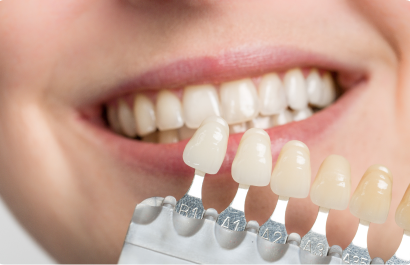
Dr. Rena Uberoi approaches porcelain restorations with strict clinical exactness. We perform an extensive diagnostic analysis of your facial proportions, lip dynamics, and functional bite mechanics before any treatment begins. By utilising ultra-minimal preparation techniques, we preserve the absolute maximum amount of your natural enamel. We do not design opaque, generic "block white" smiles, we work in close partnership with elite master ceramists to create wafer-thin shells that replicate the complex depth, translucency, and light-reflecting properties of natural human enamel.
The Materials We Use
-
IPS e.max® Lithium Disilicate
The material of choice for premium veneers. Its unique crystalline structure allows us to achieve incredibly thin margins (often less than 0.3mm) while providing exceptional flexural strength. Light passes through the restoration and reflects off the underlying tooth structure, perfectly replicating the optical behaviour of natural enamel.
Your Journey
-
Digital Smile Design & Photography
High-resolution facial photographs, 3D intraoral scans, and diagnostic X-rays. Using advanced software, Dr. Uberoi designs the precise architecture of your new smile around your facial symmetry, eye line, and lip curvature.
-
The Wax-Up Consultation
Our master ceramist creates a physical 3D model (a diagnostic wax-up) based on the digital blueprint. You return to the clinic to review this model, seeing and feeling the planned shapes and lengths before any work is performed on your teeth.
-
Minimal Enamel Preparation & Digital Scanning
To ensure the final veneers sit flush and do not look bulky, we carefully reshape the outermost enamel layer, typically removing less than 0.5mm. A definitive 3D digital scan is taken and transmitted to the laboratory.
-
The Trial Smile
A set of temporary provisional veneers is placed before you leave the clinic. You wear this Trial Smile for up to two weeks in the real world, evaluating aesthetics, comfort, and speech. Any adjustments are recorded and communicated to the laboratory before definitive fabrication.
-
Definitive Characterisation & Bonding
Each veneer is individually trialled under magnification for margin accuracy. Once approved, the teeth are isolated, conditioned with a specialised primer, and the porcelain is permanently bonded using high-strength resin cement.
Transparent fees
| Porcelain Veneer (master-crafted, per tooth) | From £1,200 |
|---|---|
| Comprehensive Cosmetic Consultation & Smile Design | Confirmed at consultation |
| Diagnostic Wax-Up & Trial Smile Fabrication | Confirmed at consultation |
Fees confirmed in writing at your consultation. No treatment proceeds without your agreement.
Email Dr Rena Uberoi
Send us an email and we aim to get back to you the same day.
Frequently asked questions
Are porcelain veneers a reversible procedure?
No. A microscopic layer of outer enamel is permanently reshaped to accommodate the ceramic shell. Once prepared, the tooth will always require either a veneer or a crown for protection. This is precisely why Dr. Uberoi places such emphasis on thorough planning, the wax-up consultation, and the trial smile phase, these are not optional extras, they are the clinical and ethical foundation of the procedure.
How long do porcelain veneers last?
With excellent home care, routine hygiene cleanings, and a stable bite, high-quality porcelain veneers typically last between 10 and 15 years, often considerably longer. The porcelain itself is completely impervious to decay and permanently stain-resistant. The natural tooth beneath it remains vulnerable to plaque, making diligent home care important.
Will my veneers stain from coffee or red wine?
No. High-quality dental porcelain is non-porous and finished with a glass glaze. It is entirely resistant to discolouration from dark liquids, heavily pigmented foods, and tobacco use.
What happens if I grind my teeth at night?
Nocturnal bruxism can fracture or dislodge porcelain restorations over time. If signs of grinding are identified during the initial assessment, as they frequently are, fabricating a custom-milled night guard is made a mandatory part of your treatment plan. Protecting a significant cosmetic investment with a well-made splint is simply sensible clinical care.
Will they look natural, or too bright and artificial?
That is entirely in the design and the ceramist. We do not produce opaque, uniform smiles unless that is specifically what you want. We work from your facial features, skin tone, and personal preferences to design restorations that look like a refined version of your natural teeth. Our ceramists hand-layer variations in translucency, texture, and surface characterisation into every veneer.
Book a veneer consultation
Book a consultation for an honest assessment and a clear written plan.